
African readings of contemporary wars
Study day of the Department of Political Science of the University of Douala, on 11 November 2026: Israel–Palestine, Russia–Ukraine, Israel and the United States facing Iran.
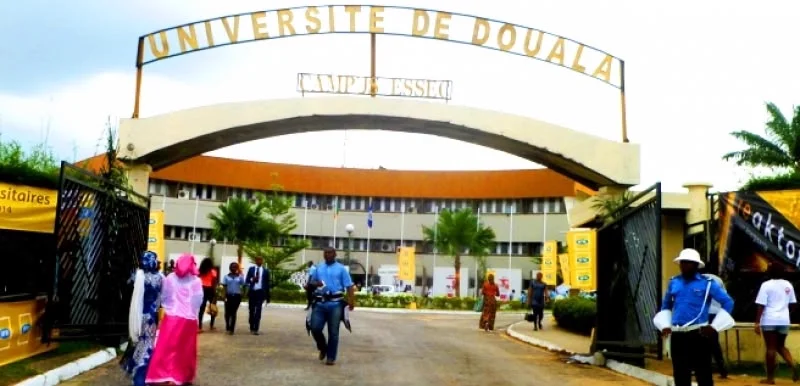
Study day · Call for papers
Making Africa an actor in international relations thinking
The wars in the Middle East and Eastern Europe are not distant for the Global South: they awaken colonial memories and raise questions of sovereignty, justice and world order.
The study day aims to produce situated, critical and original African readings of these conflicts, and to go beyond analysing only the diplomatic “reactions” and “alignments” of African states.
Date
11 November 2026
Venue
Amphi 100 Georges Madiba, University of Douala
Organiser
Department of Political Science, University of Douala
Coordinator
Dr Martin Raymond Willy Mbog Ibock
Proposals
300 to 500 words, with title, axis, indicative bibliography and contact details
Submission
ibockmartin@gmx.fr or ibockmartin@yandex.com
Calendar
From the call to the study day
1 September 2026
Launch of the call for papers
End of September 2026
Submission deadline: exact date to be confirmed
11 October 2026
Notification to authors
11 November 2026
Study day at the University of Douala
Thematic axes
Eight lines of inquiry
Proposals may also address other relevant topics, in the spirit of the call.
Axis 1
Iran, Africa and the conflict: alliances, tensions and realignments
Axis 2
Political economy of wars: resources, debts and dependencies
Axis 3
Security and terrorism: the strategic consequences of conflicts for Africa
Axis 4
African philosophy and international relations: ubuntu, communalism and conflict resolution
Axis 5
Narrative and storytelling of war
Axis 6
Epistemologies of the South and the decolonisation of international relations
Axis 7
Narratives, arts and counter-memories: Africa telling the war
Axis 8
Nuclear proliferation and the new geopolitics of the Global South
The framework
What an “African reading” is
Rooted in colonisation, liberation struggles, apartheid and Pan-African movements.
Relational: it draws connections between the Palestinian and Ukrainian situations and the African experience.
Critical of analytical categories inherited from Western thought.
Political: it takes a position and does not merely describe.
Diverse across national, religious and diplomatic contexts.
Comparative across conflict zones and the differential application of international law.
Follow-up
Publication
Accepted papers may lead to a collective publication following the study day.
The format will be defined by the pilot scientific team.
Scientific team
A pilot team from the University of Douala
International relations scholars and political sociologists from the Department of Political Science.
Dr Martin Raymond Willy MBOG IBOCK
Coordinator
International relations scholar, University of Douala
Prof. Bertrand ATEBA
Pilot scientific team
International relations scholar, University of Douala
Prof. Auguste David NGUELIEUTOU TCH.
Pilot scientific team
Political sociologist, University of Douala
Prof. Alphonse Bernard AMOUGOU MBARGA
Pilot scientific team
Political sociologist, University of Douala
Prof. Aristide Michel MENGUELE MENYENGUE
Pilot scientific team
Political sociologist, University of Douala